
Iguazu Falls in Argentina VS Brazil: Everything You Need to Know
“My poor Niagara…”
That is what Eleanor Roosevelt reportedly said when she saw Iguazu Falls.
Welcome to Iguazu Falls, one of the most important destinations in Argentina, Brazil, and South America!
Every year, millions of people visit this extraordinary natural attraction shared by Argentina and Brazil. In 2019 alone, the park received 1,640,000 visitors, including both local and international travelers.
And it is easy to understand why everyone is amazed by this destination.
Iguazu Falls is protected by two national parks: Iguazú National Park in Argentina and Iguaçu National Park in Brazil. Although the waterfalls are the main attraction, they are surrounded by a vast protected area covering approximately 252,982 hectares: 67,720 hectares on the Argentine side and 185,262 hectares on the Brazilian side.
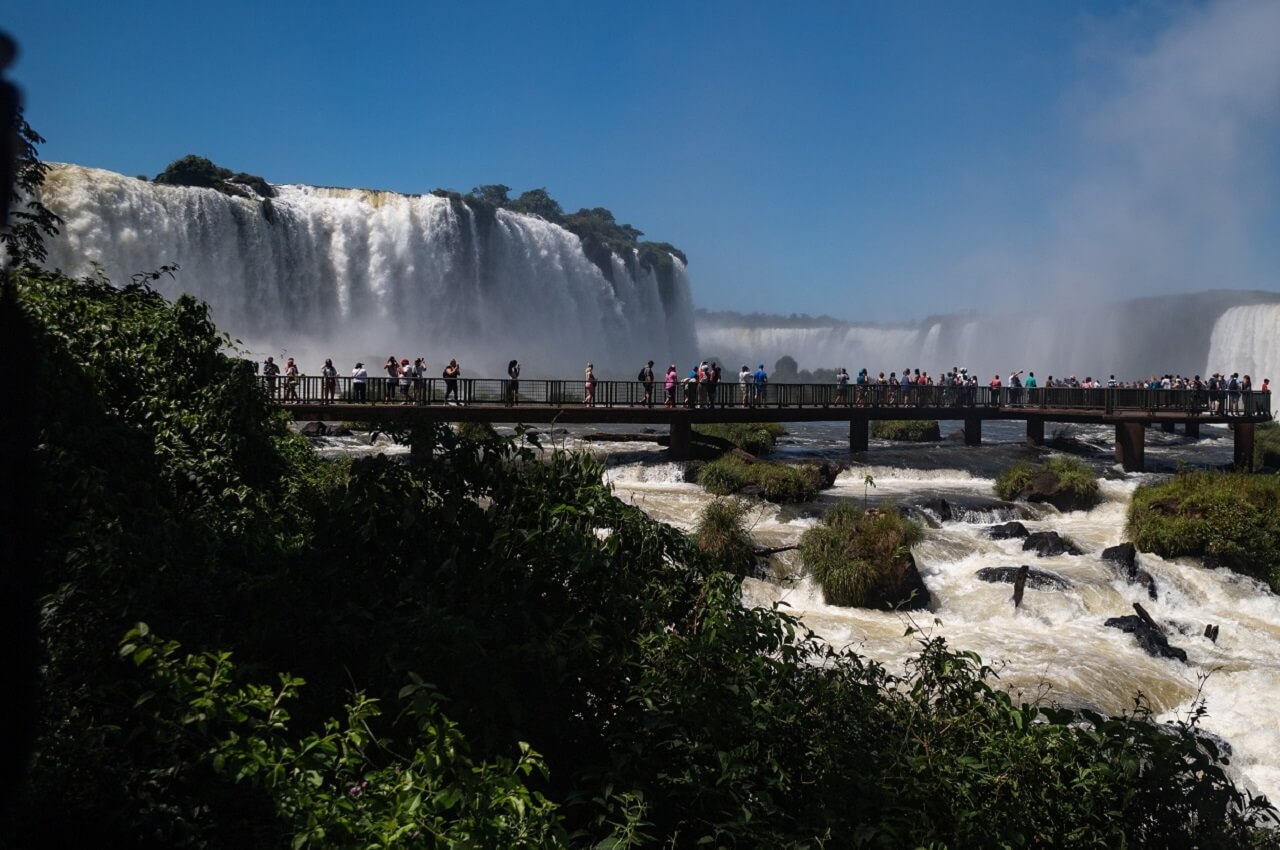
The importance of the falls led both countries to protect the surrounding rainforest by creating national parks, first in Argentina in 1934 and later in Brazil in 1939. After decades of welcoming visitors fascinated by the landscape, wildlife, and powerful sound of the waterfalls, UNESCO recognized Iguazú National Park as a World Heritage Site in 1984. Iguaçu National Park, on the Brazilian side, received the same recognition in 1986.
Why are Iguazu Falls so famous? Photos and videos are often enough to reveal their impressive beauty, but the importance of this destination goes far beyond tourism. The national parks protect a rich ecosystem filled with native plants and wildlife, forming part of one of the most valuable natural environments in South America.
Every visitor who comes to Iguazu Falls contributes to the continued conservation of this protected area.
The falls have also supported the development of the surrounding communities, helping Puerto Iguazú and Foz do Iguaçu grow through tourism and creating new opportunities for their residents.
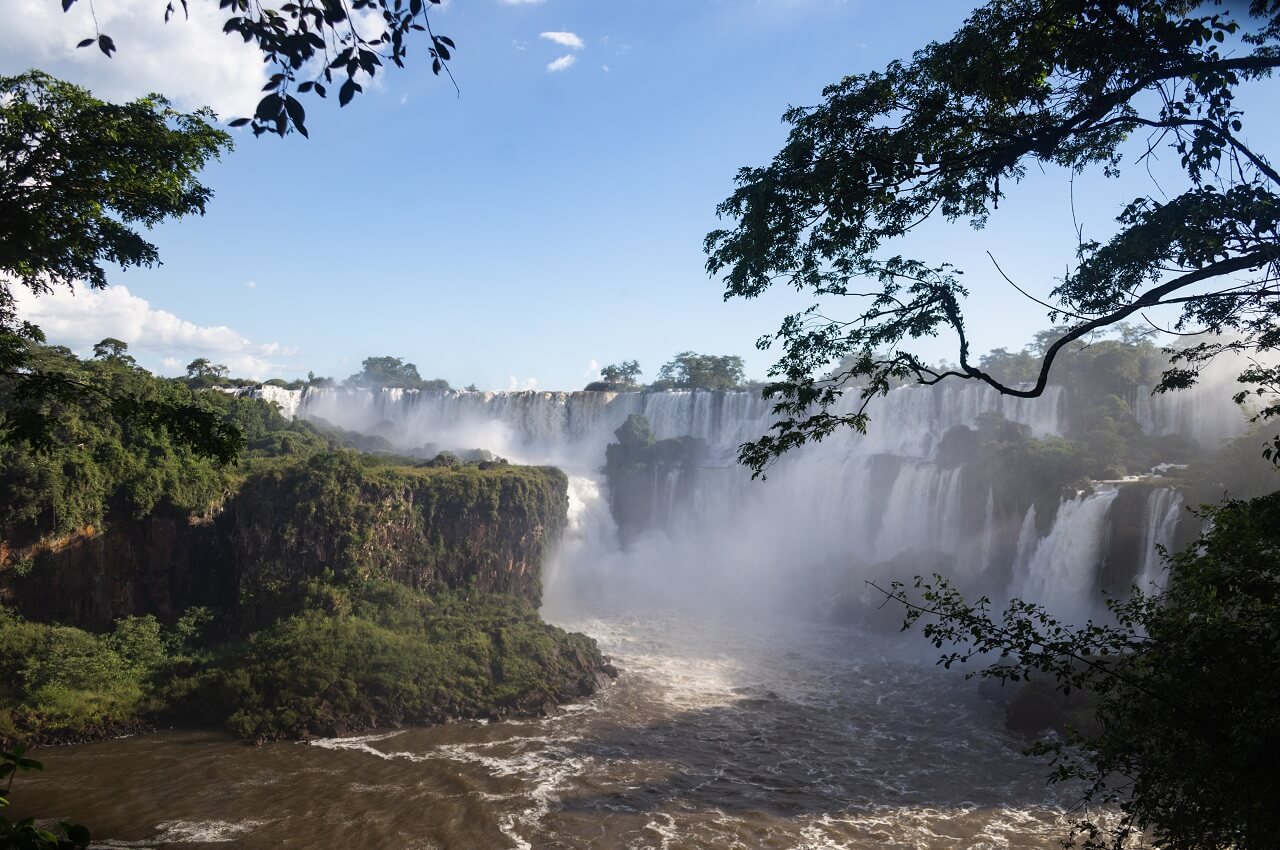
🌊 Iguazu Falls vs. Other Famous Waterfalls
Niagara Falls is one of the most famous natural attractions in North America, shared by the United States and Canada. Although both destinations are impressive, Iguazu Falls and Niagara Falls offer very different landscapes and visitor experiences.
Niagara Falls vs Iguazu Falls
Niagara Falls is shared by the United States and Canada are an important attraction in both countries, with more than 12 million visitors per year.
But how Niagara Falls compares with Iguazu Falls?
| Feature | Iguazu Falls | Niagara Falls |
|---|---|---|
| Location | Argentina and Brazil | United States and Canada |
| Maximum height | Approximately 80–82 m | Approximately 51–52 m |
| Total width | Approximately 2.7 km | Approximately 1.2 km across the three main falls |
| Number of waterfalls | Around 275 individual cascades, depending on water levels | 3 main waterfalls |
| Natural setting | Subtropical rainforest within two national parks | A protected river landscape surrounded by developed urban areas |
Iguazu Falls vs. Victoria Falls
Victoria Falls is one of Africa’s most impressive natural attractions. Located on the border between Zambia and Zimbabwe, it is known locally as Mosi-oa-Tunya, meaning “The Smoke That Thunders.”
Both Victoria Falls and Iguazu Falls are shared by two countries, protected as UNESCO World Heritage Sites, and recognized among the world’s most remarkable waterfall systems. However, their landscapes and structures are very different.
| Feature | Iguazu Falls | Victoria Falls |
|---|---|---|
| Location | Argentina and Brazil | Zambia and Zimbabwe |
| Maximum height | Approximately 80–82 m | Approximately 108 m |
| Total width | Approximately 2.7 km | Approximately 1.7 km |
| Waterfall structure | Around 275 individual cascades, depending on water levels | A broad, largely continuous curtain of water |
| Natural setting | Subtropical rainforest within two national parks | Zambezi River landscape surrounded by woodland and savanna |
| Visitor experience | Multiple walking circuits and viewpoints on the Argentine and Brazilian sides | Viewpoints along the gorge from the Zambian and Zimbabwean sides |
So, How Does Iguazu Falls Compare?
Niagara Falls, Victoria Falls, and Iguazu Falls are all impressive, but each one stands out for different reasons.
Niagara Falls is known for its powerful flow, compact layout, and highly developed visitor infrastructure. Victoria Falls stands out for its height and its vast, continuous curtain of water. Iguazu Falls, meanwhile, is distinguished by its width, hundreds of individual cascades, subtropical rainforest, and extensive network of viewpoints across Argentina and Brazil.
There is no single winner. Each destination offers a different kind of experience, but Iguazu Falls combines scale, variety, and natural surroundings in a way that makes it one of the most remarkable waterfall systems in the world.
📜 History of Iguazu Falls
Iguazu Falls is much more than one of the most visited natural attractions in Argentina and Brazil. Its history brings together Indigenous culture, European exploration, early tourism, and decades of conservation work.
But before the destination became the place we know today, it had a long and fascinating story.
The name Iguazú comes from the Guaraní words y, meaning “water,” and guazú, meaning “big” or “great.” Together, they can be translated as “Great Water”, a name that perfectly reflects the scale and power of the falls.
The falls and the surrounding rainforest were known and inhabited by Indigenous communities long before the arrival of Europeans. In 1542, Spanish explorer Álvar Núñez Cabeza de Vaca became the first documented European to reach the area while traveling toward Asunción, in present-day Paraguay. Impressed by the landscape, he named the waterfalls Saltos de Santa María.
During the following centuries, Jesuit missions were established throughout the region that now includes parts of Argentina, Brazil, and Paraguay. These settlements became an important part of the history of the Guaraní people and European colonization in South America. The Jesuits were expelled from the Spanish territories in 1767, and the region later passed through different stages of settlement and economic development.
By the end of the 19th century, the land surrounding the falls was still considered remote and difficult to access. Argentine businessman and politician Gregorio Lezama acquired part of the area but later sold it at auction, where it was reportedly described as “a block of jungle bordering several waterfalls.”

One of the first organized tourist expeditions reached the falls in 1901. The journey revealed the destination’s enormous potential, but it also showed how difficult the area was to access at the time.
Among the members of that expedition was Victoria Aguirre, whose financial contribution helped fund the construction of one of the first roads connecting the settlement of Puerto Iguazú with the waterfalls. Her contribution was so important to the development of local tourism that one of Puerto Iguazú’s main avenues now bears her name.
In the early 20th century, new paths, basic accommodation, and transportation routes gradually made the falls more accessible to visitors. Puerto Iguazú began to grow alongside tourism and other regional industries, while awareness of the area’s natural importance also increased.
A major step toward protecting the destination came in 1934, when Argentina created Iguazú National Park. Brazil established Iguaçu National Park five years later, in 1939, protecting the rainforest and waterfalls on the opposite side of the river.
International recognition followed. UNESCO added Iguazú National Park in Argentina to the World Heritage List in 1984, while Iguaçu National Park in Brazil received the same recognition in 1986. Together, the two parks protect one of the most important remaining areas of the Atlantic Forest and one of the world’s most spectacular waterfall systems.
In 2011, Iguazu Falls was also selected as one of the New7Wonders of Nature, further strengthening its place among the world’s most internationally recognized natural attractions.
Today, Iguazu Falls welcomes visitors from around the world, but its history is also a reminder of the importance of protecting the rainforest, wildlife, and cultural heritage that surround this extraordinary destination.
🗺️ Location of Iguazu Falls
Iguazu Falls is located in South America, on the border between Argentina and Brazil. The waterfalls are formed by the Iguazu River and are protected by two national parks: Iguazú National Park in Argentina and Iguaçu National Park in Brazil.
Although Paraguay is also part of the region known as the Triple Frontier, the waterfalls are not located within Paraguayan territory and cannot be seen from Paraguay.
The closest cities are Puerto Iguazú, in Argentina, and Foz do Iguaçu, in Brazil. These two destinations serve as the main bases for visiting the falls, with a wide range of hotels, restaurants, transfers, and tourist services.
On the Argentine side, the entrance to Iguazú National Park is approximately 18 kilometers from Puerto Iguazú.
On the Brazilian side, the Cataratas Visitor Center is located along BR-469, approximately 18 kilometers from central Foz do Iguaçu.
The two cities are connected by the Tancredo Neves International Bridge. Visitors crossing between Argentina and Brazil must complete the corresponding border and immigration procedures, so travel times may vary depending on traffic and border conditions.
Because each national park offers a different perspective, visiting both sides is highly recommended. The Argentine side provides an extensive network of walkways and close-up views, while the Brazilian side offers wide panoramic views of the waterfall system.

Airports Near Iguazu Falls
There are two main airports serving the destination, one in Argentina and one in Brazil.
Cataratas del Iguazú International Airport (IGR) is located on the Argentine side. It is generally the most convenient option for travelers arriving from Buenos Aires or other destinations within Argentina.
Foz do Iguaçu International Airport (IGU) is located on the Brazilian side, along BR-469. It mainly connects the region with Brazilian cities such as São Paulo, Rio de Janeiro, Curitiba, and other national or international destinations.
How to arrive to Iguazu Falls from Rio de Janeiro?
How to arrive to Iguazu Falls from Sao Paulo?
The destination is connected with several major cities through direct flights. For example, traveling to Iguazu Falls from Buenos Aires takes approximately two hours by plane. Direct flights are also available from Brazilian cities such as Rio de Janeiro and São Paulo.
The airport you choose will usually depend on your point of origin, flight availability, and where you plan to stay. However, it is possible to arrive through one country and stay in the other, provided that you have the required travel documents and allow enough time for the border crossing.
Both airports are relatively close to the national parks, making Iguazu Falls an accessible destination for short stays. Even so, visiting both sides on a same-day flight itinerary can be rushed, especially when border procedures, park schedules, and transfer times are taken into account.
🏞️ National Parks in Iguazu Falls
Iguazu Falls is shared by two countries and protected by two national parks: Iguazú National Park in Argentina and Iguaçu National Park in Brazil.
Although both parks protect the same waterfall system and surrounding Atlantic Forest, they offer very different visitor experiences. The Argentine side has a wider network of walking circuits that brings visitors above and close to several individual waterfalls. The Brazilian side follows a shorter panoramic route with broad views across much of the waterfall system.
For the complete Iguazu Falls experience, visiting both sides is highly recommended.
🇦🇷 Iguazu Falls in Argentina
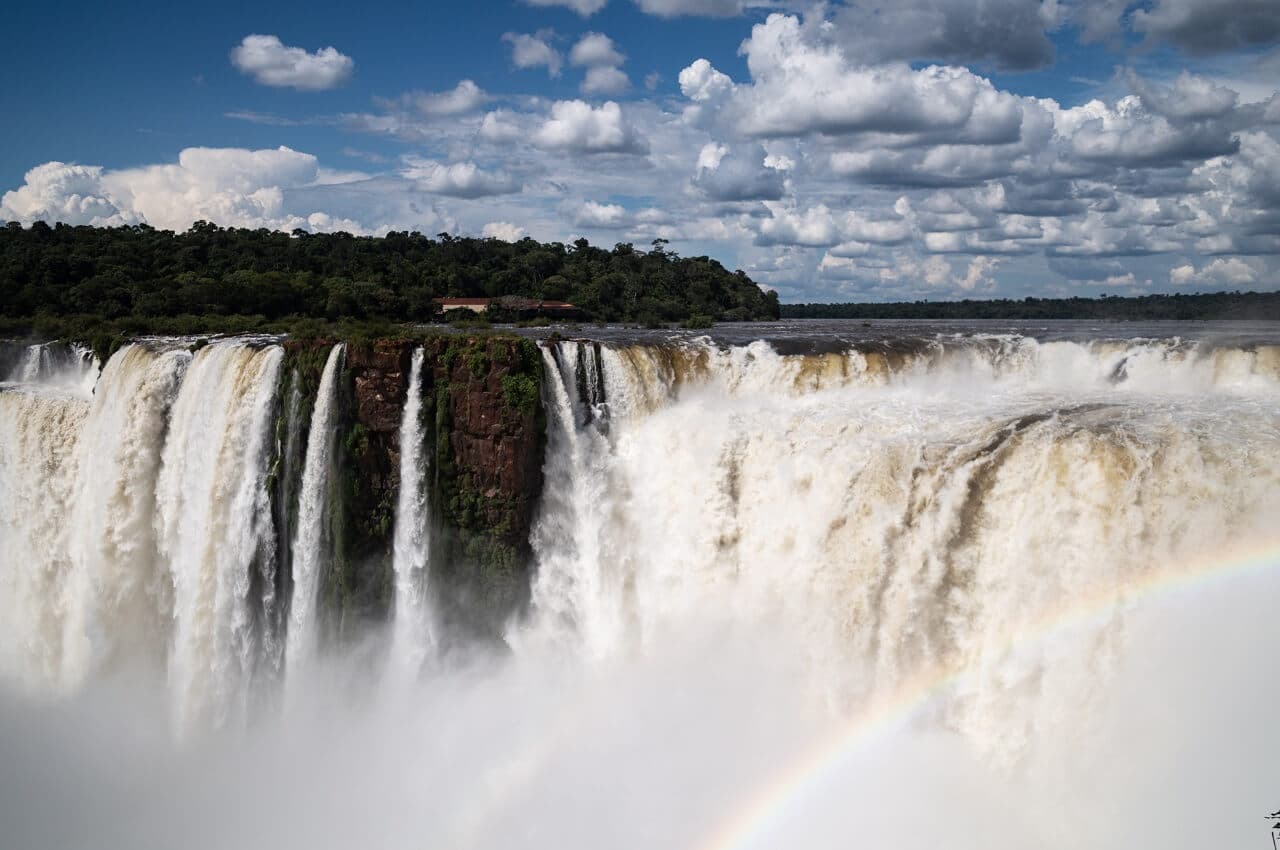
Usaría aquí la fotografía actual de Garganta del Diablo como apertura visual del lado argentino. La imagen muestra correctamente la escala del salto y funciona mejor antes del texto introductorio.
The Argentine side of Iguazu Falls offers the largest network of visitor walkways and trails in the destination. The main circuits allow you to see the waterfalls from above, below, and at very close range, while additional trails lead through quieter areas of the surrounding rainforest.
Iguazú National Park covers approximately 67,720 hectares and is located about 18 kilometers from Puerto Iguazú. Most travelers spend a full day exploring this side because the main circuits are spread across different sections of the park.

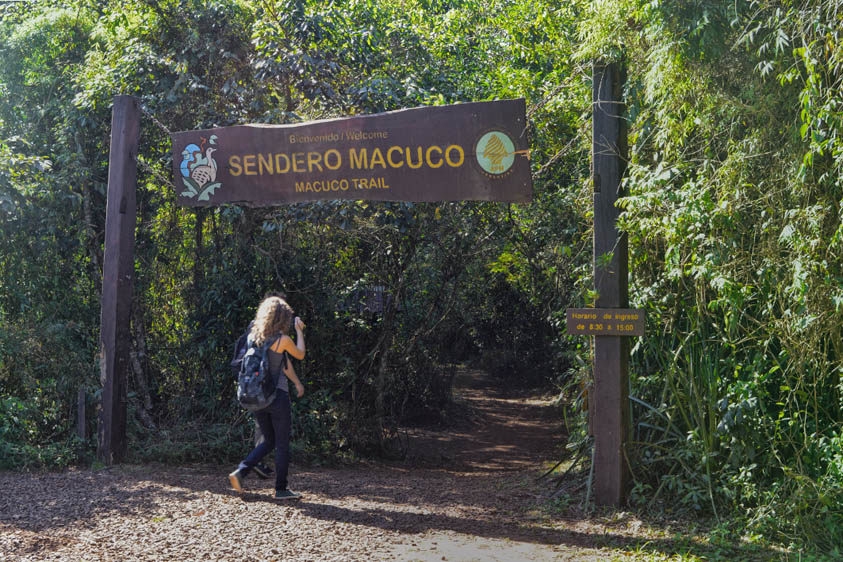
Main Circuits on the Argentine Side
The Iguazu National Park on the Argentine side has 6 different circuits to do.
Upper Circuit
Lower Circuit
Devil's Throat Circuit
Macuco Trail
Green Trail
Upper Circuit
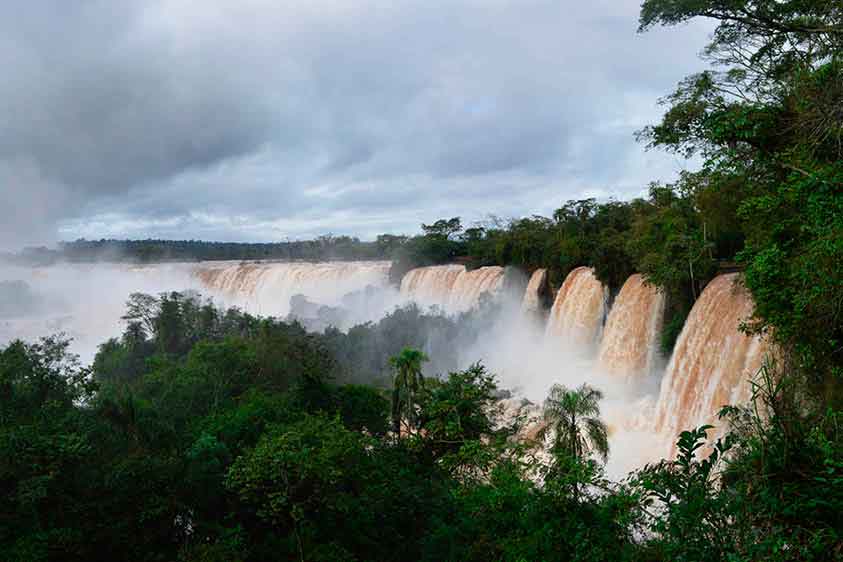
The Upper Circuit offers panoramic views from walkways located above several of the Argentine waterfalls. Along the route, you can see falls such as Dos Hermanas, Chico, Ramírez, Bossetti, Adán y Eva, Méndez, and Mbiguá.
The circuit provides an excellent perspective over the edge of the waterfalls and the surrounding rainforest. From some viewpoints, you can also see San Martín Island, sections of the Lower Circuit, and parts of the Brazilian side.
The walk is mostly flat and does not include stairs, making it one of the most accessible circuits in the park.
Distance: Approximately 1.7 km
Estimated duration: Around 1 hour 30 minutes to 2 hours
Difficulty: Low
Accessibility: Accessible walkways without stairs
Lower Circuit
The Lower Circuit takes you deeper into the rainforest and offers a closer, lower perspective of the waterfalls. As you walk along its paths and walkways, you can enjoy views of Dos Hermanas, Bossetti, and other surrounding falls, as well as San Martín Island and the river below.
The route combines walkways, slopes, and sections with stairs. Some areas are accessible, but completing the entire circuit may be challenging for visitors with reduced mobility.
One of its most impressive sections brings you close to Bossetti Falls, where the spray and sound of the water create a much more immersive experience.
Distance: Approximately 1.7 km
Estimated duration: Around 1 hour 30 minutes to 2 hours
Difficulty: Moderate
Accessibility: Partially accessible; some sections include stairs and steep slopes
Devil's Throat Circuit
The Devil’s Throat is the most powerful and iconic waterfall in Iguazu. The viewing platform places you directly above the main horseshoe-shaped drop, surrounded by mist, roaring water, and panoramic views of the upper Iguazu River.
To reach the circuit, visitors take the Rainforest Ecological Train to Garganta Station. From there, a long, flat walkway crosses the river and several small islands before arriving at the main platform.
The walkway includes rest areas along the way and is suitable for wheelchairs and visitors with reduced mobility. Because this is the most popular area of the park, it can become crowded, especially around midday.
Distance: Approximately 2.2 km round trip
Estimated duration: Around 1 hour 30 minutes to 2 hours, including the train and waiting time
Difficulty: Low, although the distance is considerable
Accessibility: Flat and accessible walkway
The last train to Devil’s Throat currently departs at 3:30 PM, so this circuit should not be left until the end of the day.
Macuco Trail
The Macuco Trail offers a quieter and more natural experience away from the main waterfall circuits. The trail runs through dense rainforest with minimal visitor infrastructure, making it a good option for travelers interested in native vegetation, birds, butterflies, and wildlife.
At the end of the trail, visitors reach Arrechea Falls, a waterfall approximately 20 meters high.
The complete route is approximately 7 kilometers round trip. Restrooms and visitor services are only available near the entrance, so visitors should carry water and allow enough time to complete the walk before closing.
Distance: Approximately 7 km round trip
Estimated duration: Around 3 hours
Difficulty: Moderate
Accessibility: Not suitable for wheelchairs or visitors with significant mobility limitations
Green Trail
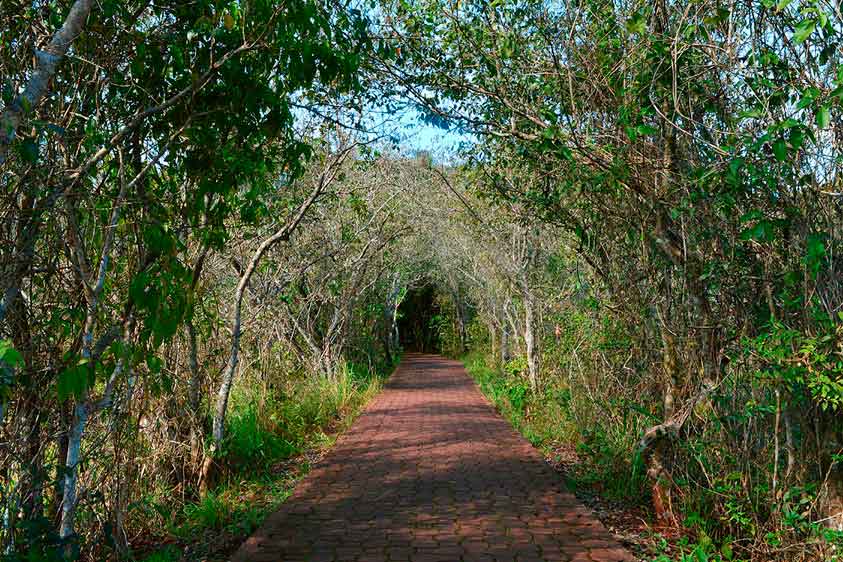
The Green Trail is a short and pleasant walk through the rainforest that connects the Central Station area with Cataratas Station and the entrances to the Upper and Lower circuits.
It is a useful alternative to taking the train between these two stations and offers opportunities to observe birds, butterflies, and coatis along the way.
Distance: Approximately 650 m
Estimated duration: Around 15 to 30 minutes
Difficulty: Low
Accessibility: Flat trail without stairs
Internal Transportation – Rainforest Ecological Train
The Rainforest Ecological Train connects the main visitor areas inside the Argentine park. It operates between Central Station, Cataratas Station, and Garganta Station, providing access to the principal circuits without the use of conventional vehicles.
The train is open-sided, allowing visitors to see and hear the surrounding rainforest during the journey. Its use is included with the national park entrance ticket.
Operating frequency may vary according to visitor numbers, weather conditions, and park operations. For that reason, it is better not to promise an exact departure every 15 or 20 minutes.
The train is internal transportation, not one of the park’s circuits. This distinction should also be reflected in the table of contents.

Entry Fee for Iguazu National Park (Argentina)
Entrance fees vary according to nationality, residency, age, and other visitor categories. Reduced rates or free admission may apply in certain cases.
Because prices and eligibility conditions can change, visitors should check the official information before their visit.
Check the current entrance fees and ticket options on the official Iguazú National Park website.
The entrance to the Argentine park includes access to the park and visit of all the circuits and the use of the Ecological Train of the Forest at no extra cost.
Opening Hours of Iguazu National Park
Iguazú National Park is open every day from 8:00 AM to 6:00 PM.
Last admission to the park: 4:00 PM
Last train to Devil’s Throat: 3:30 PM
Visitors should arrive early, especially when planning to complete the three main circuits in one day. Opening times and circuit availability may change because of weather, river conditions, maintenance, or special operations.
I would remove the statement saying that Christmas and New Year’s hours are always unchanged. Seasonal schedules should be checked closer to the travel date.
Map of Iguazu National Park (Argentina Side)
This map helps visitors understand how the train stations, walking circuits, and nature trails are connected.

🇧🇷 Iguazu Falls in Brazil
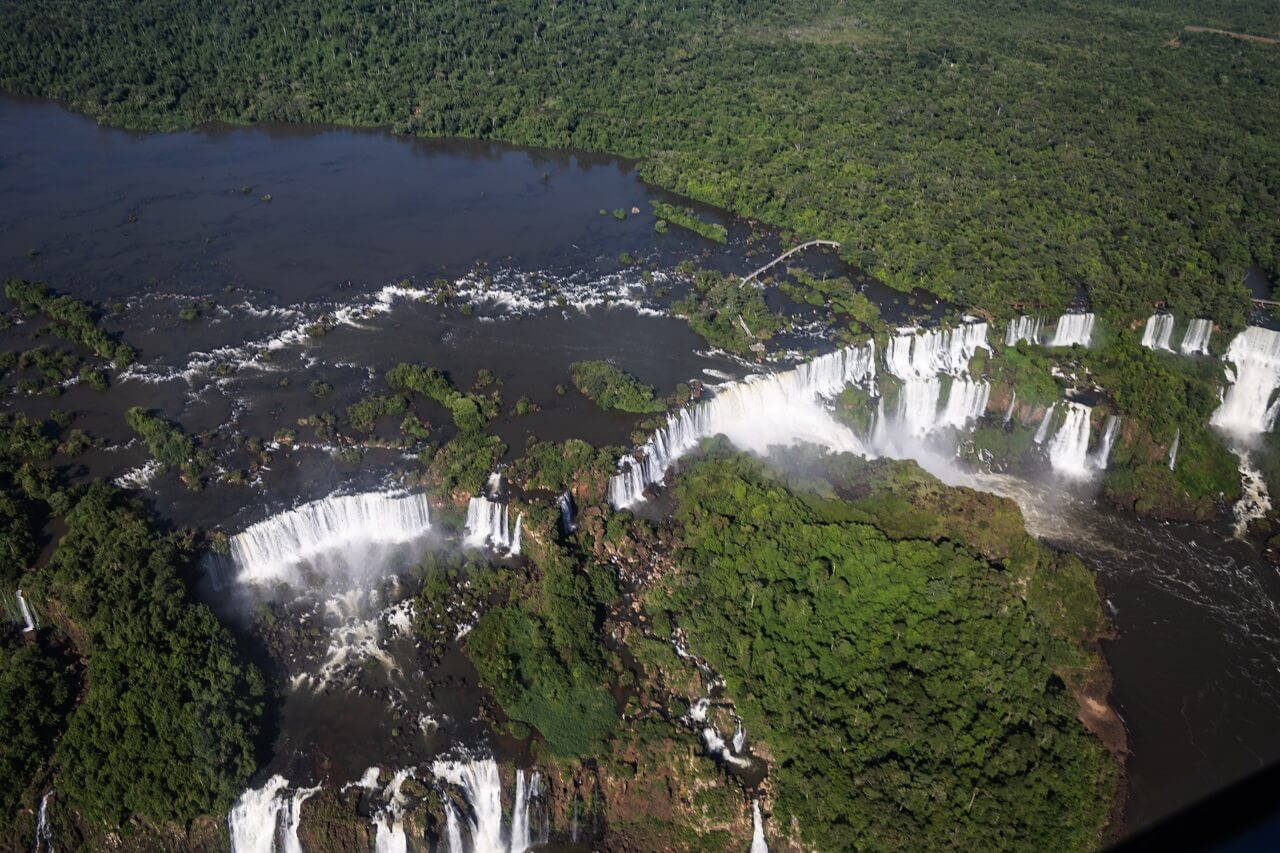
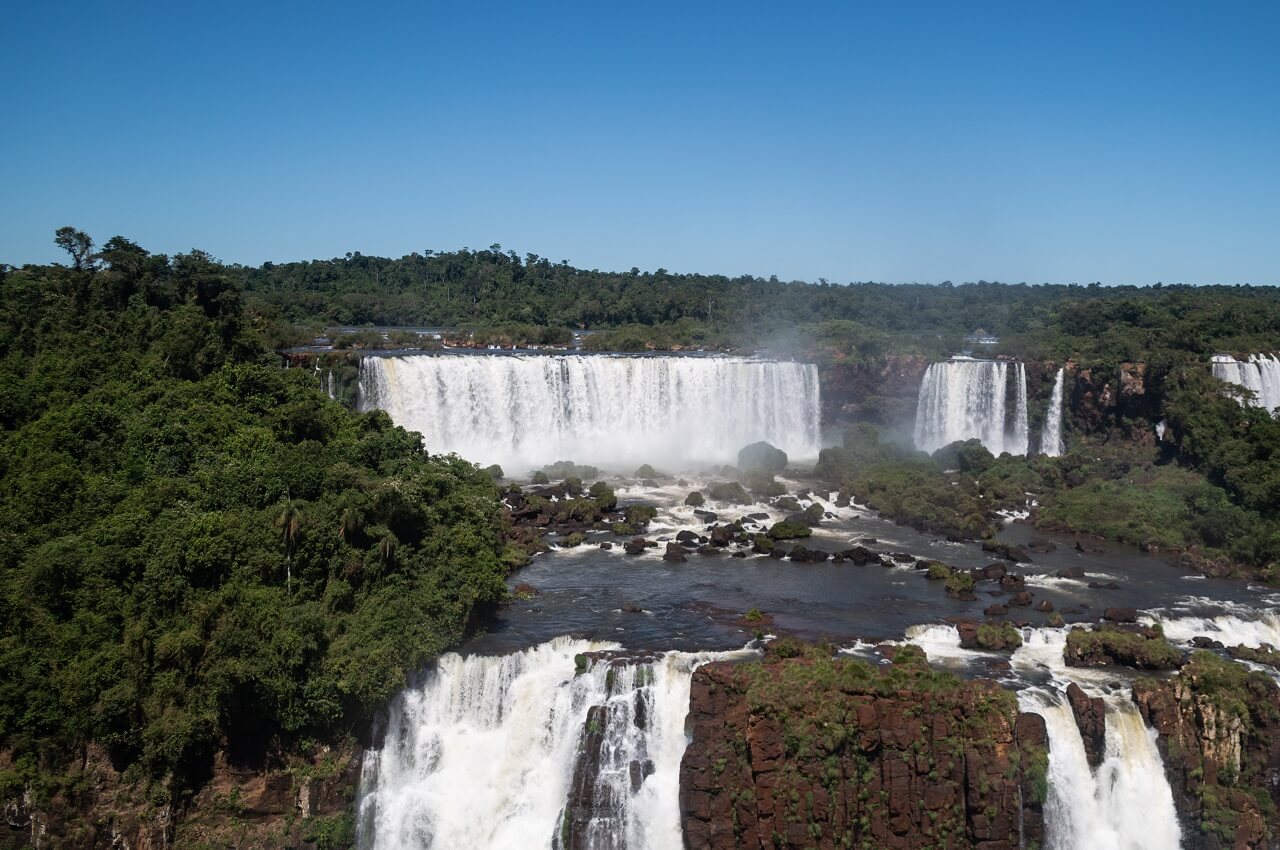
Iguaçu National Park was created in 1939 and protects approximately 185,000 hectares of Atlantic Forest on the Brazilian side of the Iguazu River. Although its principal visitor route is shorter than the network of circuits in Argentina, the Brazilian side offers the most complete panoramic views of the waterfall system.
From its viewpoints, visitors can observe many of the Argentine waterfalls across the river and gradually approach the impressive Devil’s Throat area. This makes the Brazilian side an essential complement to the closer and more immersive experience offered by the Argentine park.
Most visitors dedicate approximately two hours to the traditional visit. Additional time may be necessary for photography, meals, optional activities, or the park’s longer nature trails.
The Traditional Waterfall Visit
The traditional visit includes internal transportation from the Visitor Center, the Waterfall Trail, panoramic viewpoints, the final walkway, and access to the elevator area.
Internal Transportation
After entering the park, visitors use the official internal transportation system to travel from the Visitor Center to the waterfall area. The journey covers approximately 12 kilometers through the protected Atlantic Forest.
Internal transportation is included with the regular entrance ticket. Private vehicles are generally not permitted inside the protected visitor area, except for authorized and accredited services.
The buses stop at different visitor areas and attractions within the park. Visitors should follow the instructions provided at the Visitor Center, as routes and stopping points may change according to park operations.
Waterfall Trail
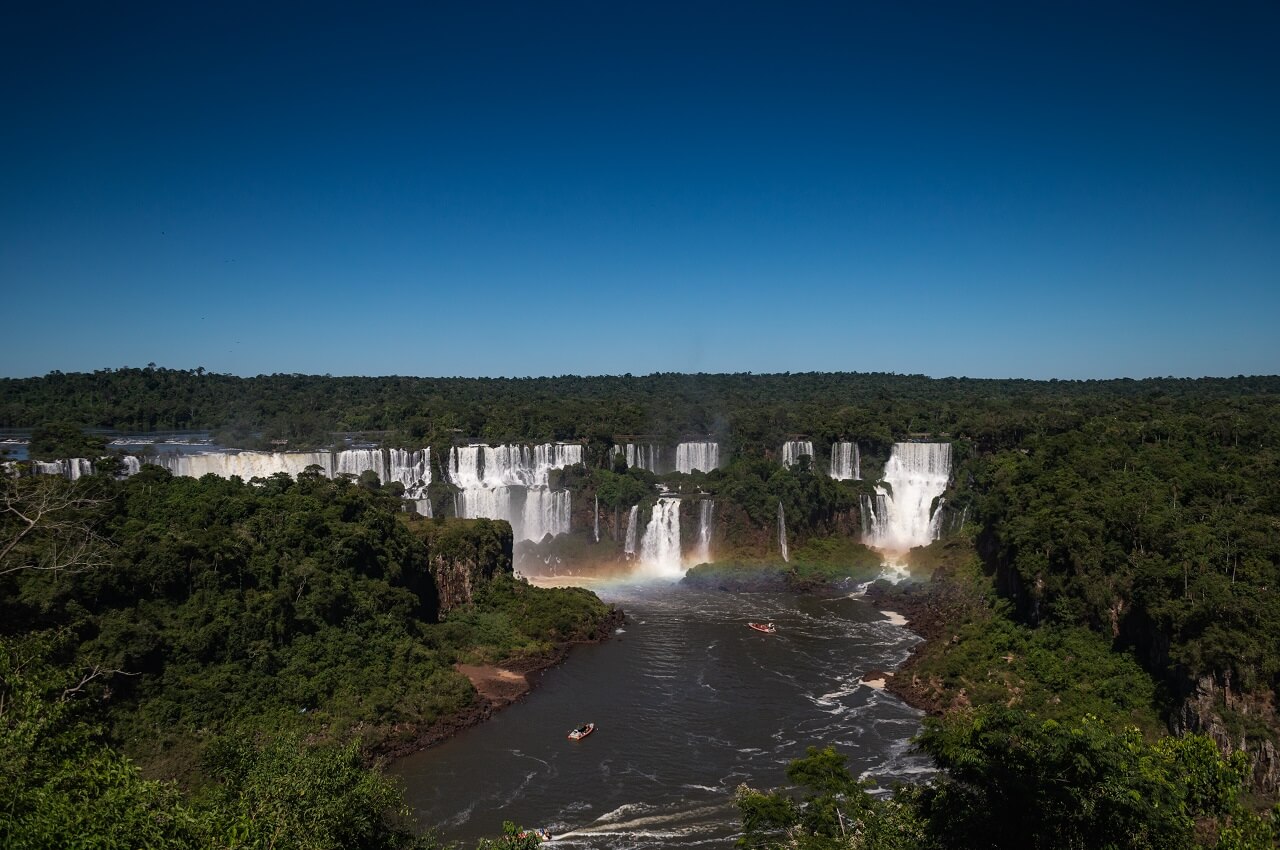
The Waterfall Trail is the main walking route on the Brazilian side. It follows the canyon through the rainforest and provides a series of increasingly impressive panoramic views of the falls.
Unlike the Argentine circuits, which bring visitors above and between individual waterfalls, this trail offers a wider perspective of the entire waterfall system. Along the way, visitors can see San Martín Island, several Argentine waterfalls, and the mist rising from Devil’s Throat.
The traditional walking section is approximately 1 kilometer long, although official park materials sometimes describe a slightly longer visitor route depending on the included access sections.
The trail includes slopes and stairways. Visitors with reduced mobility can use the accessible transportation and principal viewpoints, but they may not be able to complete every section of the walking trail. Wheelchairs are available free of charge at the Visitor Center, subject to availability.
Distance: Approximately 1 to 1.3 km
Estimated duration: Around 1 hour, excluding transportation and extended stops
Difficulty: Low to moderate
Accessibility: Main transportation and principal viewpoints are accessible; some sections include stairs and slopes
Final Walkway and Viewpoints

The final section is the highlight of the Brazilian visit. A walkway extends over the river toward the base of Floriano Falls, providing a close view of the water and a panoramic perspective toward Devil’s Throat.
The combination of spray, rushing water, and surrounding waterfalls makes this one of the most immersive points on the Brazilian side. Visitors should expect to get wet, especially when the river is high or the wind carries the mist toward the walkway.
Waterproof protection for cameras, phones, and personal belongings is recommended. Rain ponchos may be available for purchase inside the park, but visitors may also bring their own.
After the walkway, elevators connect the lower area with the upper viewpoints and visitor facilities. The upper section provides another broad view over the waterfalls and leads toward the return transportation area.
Entry Fees for Iguaçu National Park
Entrance fees vary according to the visitor category. Different rates or admission conditions may apply to international visitors, residents of Brazil and Mercosur countries, local residents, and children.
The regular ticket includes:
- Admission to the park.
- Internal round-trip transportation.
- Access to the Waterfall Trail.
- The final walkway and principal viewpoints.
- Use of the elevators.
- Access to the trails and areas included in the selected ticket category.
Tickets are limited and sold online with a scheduled date and entry time. Because prices, categories, and conditions can change, visitors should confirm the current information before their visit.
Check current entrance fees and purchase tickets on the official Iguaçu National Park website.
Opening Hours of Iguaçu National Park
Iguaçu National Park is open every day of the year, but opening times may vary between weekdays, weekends, holidays, and peak travel periods.
Visitors purchase a ticket for a specific entry time. Once inside, they may remain in the visitor area until the park’s closing time.
Because schedules may be extended or modified during holidays and high season, fixed opening hours should not be presented as permanent information.
Check the current opening hours and visitor information before your visit.
Arriving early is recommended, especially for travelers who plan to combine the traditional waterfall visit with longer trails or optional activities.
Map of Iguaçu National Park (Brazil Side)

❓ Iguazu Falls FAQs
Below, we answer some of the most common questions travelers ask when planning a visit to Iguazu Falls.
1) Can I Swim at Iguazu Falls?
No. Swimming in the waterfalls or entering the river independently is not allowed inside the national parks.
Visitors who want to experience the river can book an authorized boat ride, such as Gran Aventura on the Argentine side or Macuco Safari on the Brazilian side. These activities are operated under specific safety conditions and are not included with the regular park entrance.
2) How Much Does It Cost to Enter Iguazu Falls?
Entrance fees are different for the Argentine and Brazilian national parks. Rates may also vary according to nationality, residency, age, and other visitor categories.
Because prices and eligibility conditions can change, we recommend checking the corresponding official information before your visit:
- Check current entrance fees for Iguazú National Park in Argentina
- Check current entrance fees and tickets for Iguaçu National Park in Brazil
For the Brazilian side, tickets are sold for a selected date and entry time, so purchasing them in advance is recommended.
3) Can I Bring a Drone to Iguazu Falls?
The use of drones is generally prohibited inside both national parks unless prior authorization has been granted by the corresponding park administration.
Visitors should not bring or operate a drone without confirming the current regulations and obtaining any required permits in advance.
4) Is Iguazu Falls Safe to Visit?
Yes. Both national parks have marked trails, designated visitor areas, park staff, and controlled access. However, visitors should follow the signs and remain on authorized paths and walkways.
The wildlife is wild and should not be treated as friendly or domesticated. Do not touch or feed coatis, monkeys, or other animals, and keep food and personal belongings securely stored.
Visitors should also protect cameras, phones, and other valuables from water, especially near viewpoints exposed to heavy spray.
5) Is Iguazu Falls Worth Visiting?
Absolutely. Iguazu Falls is one of South America’s most remarkable natural destinations and offers very different experiences on each side of the border.
The Argentine side provides extensive walking circuits and close views of individual waterfalls. The Brazilian side offers broad panoramic views across much of the waterfall system.
Whenever possible, we recommend visiting both national parks.
6) Can I Visit Both Sides of Iguazu Falls in One Day?
It is possible, but the itinerary can be demanding. A same-day visit depends on park opening times, border traffic, immigration procedures, transportation, and how much time you want to spend on each side.
For a more complete experience, it is better to dedicate one full day to the Argentine side and at least half a day to the Brazilian side.
Travelers with limited time can also consider an organized one-day visit to Iguazu Falls, but the schedule should be reviewed carefully before booking.
7) Are There Lockers at Iguazu Falls?
Locker and luggage storage services may be available at the visitor areas of both national parks.
On the Brazilian side, lockers are located at the Visitor Center before the beginning of the regular visitor route. Sizes and availability may vary, so travelers carrying large suitcases should confirm the current conditions in advance. (tickets.cataratasdoiguacu.com.br)
Storage services may require an additional payment and are not included with the regular entrance ticket.
8) What Time Do Iguazu Falls Open?
Opening hours are different on the Argentine and Brazilian sides and may change during holidays, high season, maintenance periods, or special operations.
Visitors should review the dedicated opening-hours sections on this page and confirm the latest schedules on the official park websites before arriving.
Arriving early is strongly recommended, particularly on the Argentine side, where the principal circuits require most of the day.
9) Which Side of Iguazu Falls Is Better?
Both sides are worth visiting because they offer complementary experiences.
The Argentine side has a larger network of walking circuits, allowing visitors to see the waterfalls from above, below, and at close range. A full day is usually recommended.
The Brazilian side has a shorter main waterfall route and offers the best panoramic perspective of the entire waterfall system. The traditional visit usually requires less time.
The Brazilian national park is larger in total protected area, but its principal waterfall visit is more compact. The Argentine park has a more extensive network of visitor circuits.
When there is enough time, the best option is to visit both sides. Travelers who can only visit one park should consider their arrival airport, accommodation, border-crossing time, and preferred type of experience.
🐆 Wildlife in Iguazu Falls
The national parks surrounding Iguazu Falls protect one of the most biodiverse areas of the Atlantic Forest. Visitors can encounter a wide variety of birds, mammals, butterflies, reptiles, and other native species while exploring the circuits and rainforest trails.
Some animals are commonly seen near the visitor areas, while others live deeper in the forest and are rarely observed.
Coatis
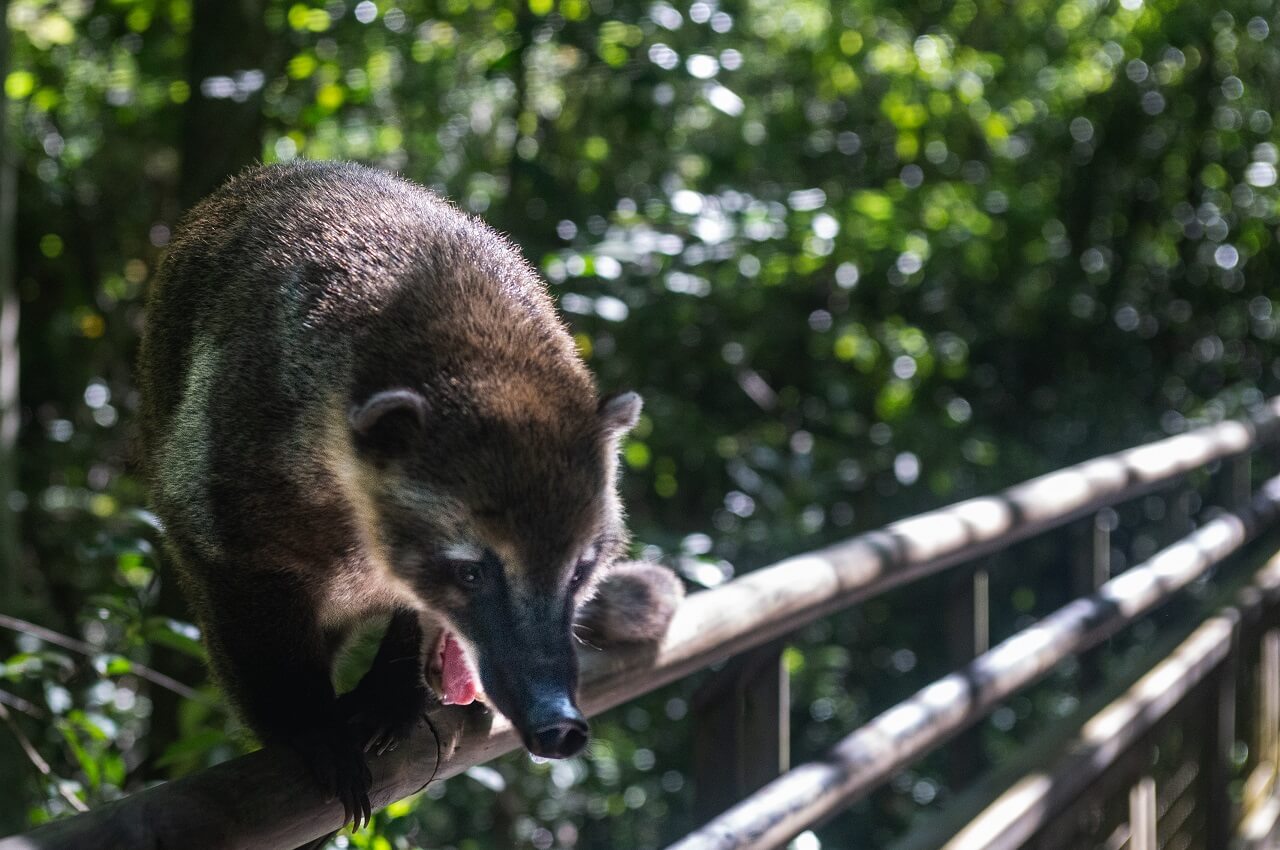
Coatis are among the animals visitors are most likely to encounter in both national parks. These small mammals usually move in groups and often approach areas where people are eating.
Although they may appear curious and accustomed to visitors, coatis are wild animals. Do not feed, touch, or attempt to photograph them at very close range. Food should remain securely stored, as coatis may try to take it from bags or tables.
Toucans and Other Birds
Toucans are one of the most recognizable birds in the region and can sometimes be seen flying above the forest or resting in the trees near the circuits.
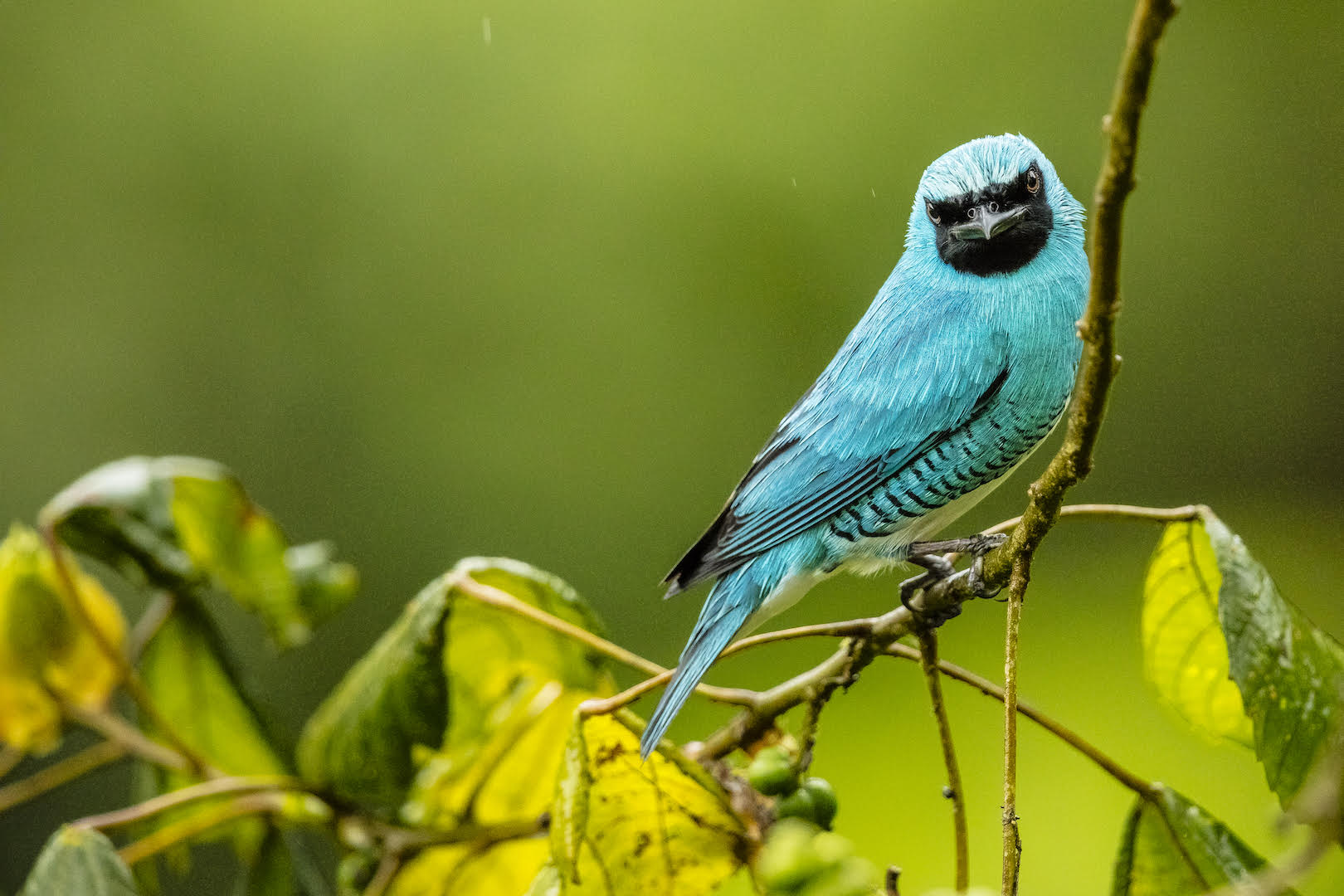
The parks are also home to hundreds of other bird species, including swifts, parrots, woodpeckers, hummingbirds, and birds of prey. The great dusky swift is especially associated with the waterfalls, as it nests on the rocky walls behind the falling water.
Travelers interested in observing and identifying local species can also join a birdwatching tour in Iguazu.

Monkeys
Black capuchin monkeys, locally known as monos caí, may occasionally appear in the trees or near visitor areas. They usually travel in groups and may approach people looking for food.
As with coatis, visitors should never feed or touch them. Human food can be harmful to wildlife and may encourage aggressive or dependent behavior.
Jaguars and Tapirs
The Atlantic Forest surrounding Iguazu Falls is also home to larger mammals, including jaguars and tapirs.
Jaguars are extremely difficult to see during a regular park visit because they generally avoid areas with large numbers of people. They are an important part of the ecosystem and one of the region’s most emblematic threatened species.
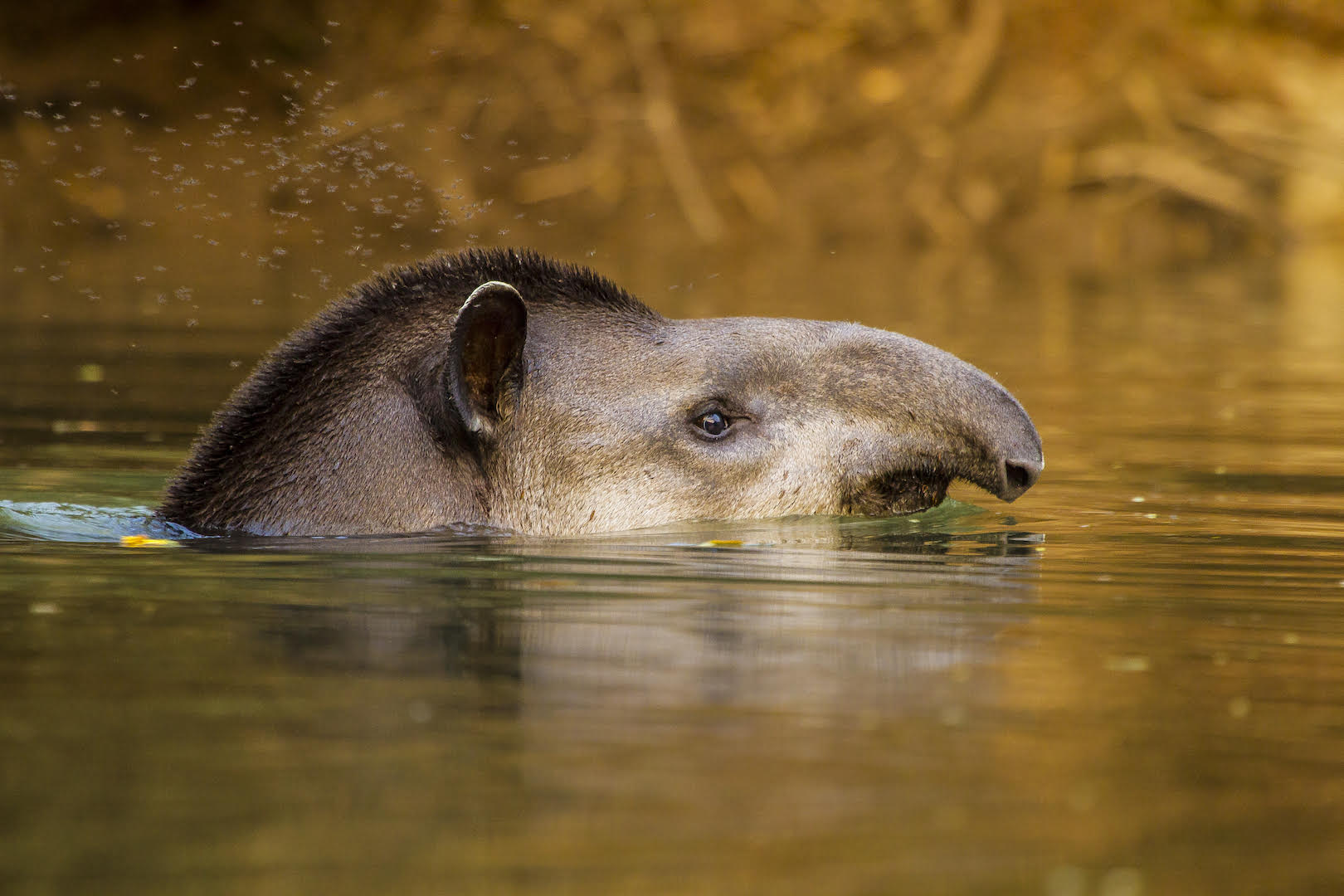
Tapirs are among the largest native mammals in South America. They are generally active in quieter forest areas and are also rarely seen along the main tourist circuits.
Wildlife Rescue Centers Near Iguazu Falls
Visitors who want to learn more about local fauna can also visit wildlife rescue and conservation centers near the national parks.
Parque das Aves, near the entrance to the Brazilian park, specializes in the conservation of Atlantic Forest birds. Güirá Oga, near Puerto Iguazú, rescues and rehabilitates animals affected by illegal trafficking, road accidents, and other human activity.
These centers should not be described simply as zoos. Their principal work is rescue, rehabilitation, conservation, and environmental education. Some animals remain under permanent care when they cannot safely return to the wild.
How to Observe Wildlife Responsibly
- Do not feed or touch any animal.
- Keep food stored inside closed bags.
- Maintain a safe distance.
- Do not use flash photography at close range.
- Stay on authorized paths and walkways.
- Do not imitate animal calls or attempt to attract wildlife.
- Follow the instructions of park staff.
Wildlife sightings are never guaranteed. The best approach is to move quietly, observe the forest carefully, and respect the animals’ natural behavior.
🌤️ Weather in Iguazu Falls
Iguazu Falls has a warm and humid subtropical climate, with rainfall throughout the year and no clearly defined dry season. The surrounding rainforest remains green in every season, making the destination suitable for visiting year-round.
Average temperatures are generally higher during the summer and milder during the winter. According to Iguazú National Park, seasonal averages range from approximately 24°C in summer to 14°C in winter, while annual rainfall is around 1,800 mm.
However, the weather can change quickly. A warm and sunny morning may be followed by clouds, rainfall, or high humidity later in the day. For this reason, visitors should be prepared for both heat and rain, regardless of the season.
Humidity Throughout the Year
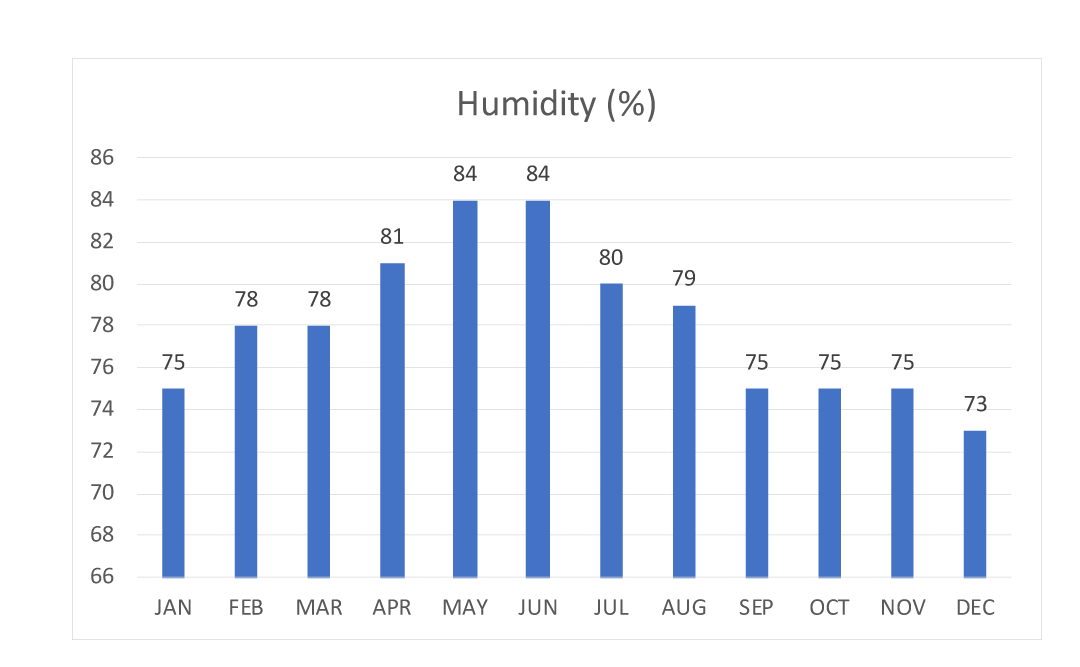
Humidity is part of the Iguazu experience throughout the year. It is usually more noticeable during the warmer months, when high temperatures and moisture combine to make the air feel hotter.
Lightweight and breathable clothing is recommended, especially during summer. Drinking water regularly and taking short breaks can also make the walking circuits more comfortable.
Average Temperatures by Month
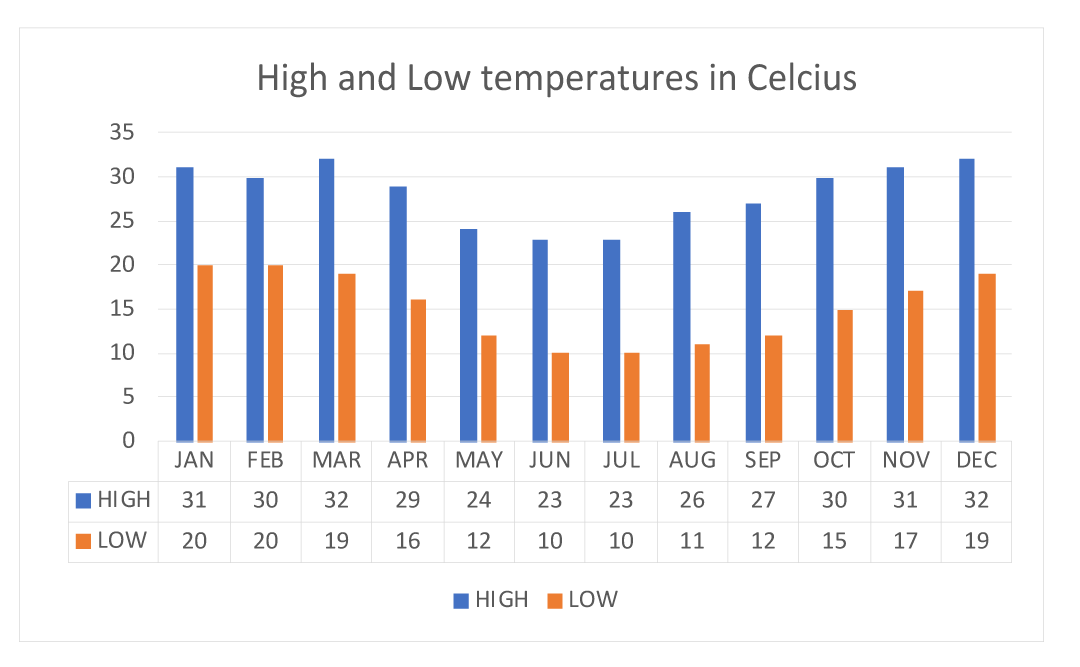
Summer, from approximately December to March, is usually hot and humid. These months are suitable for travelers who do not mind higher temperatures and want to experience the rainforest at its most lush.
Winter, from June to August, generally brings cooler and more comfortable conditions for walking. Mornings and evenings may feel fresh, so carrying a light jacket or sweater is recommended.
Autumn and spring usually offer a balance between both conditions, with warm days, changing humidity, and occasional rainfall.
Rainy Days Throughout the Year
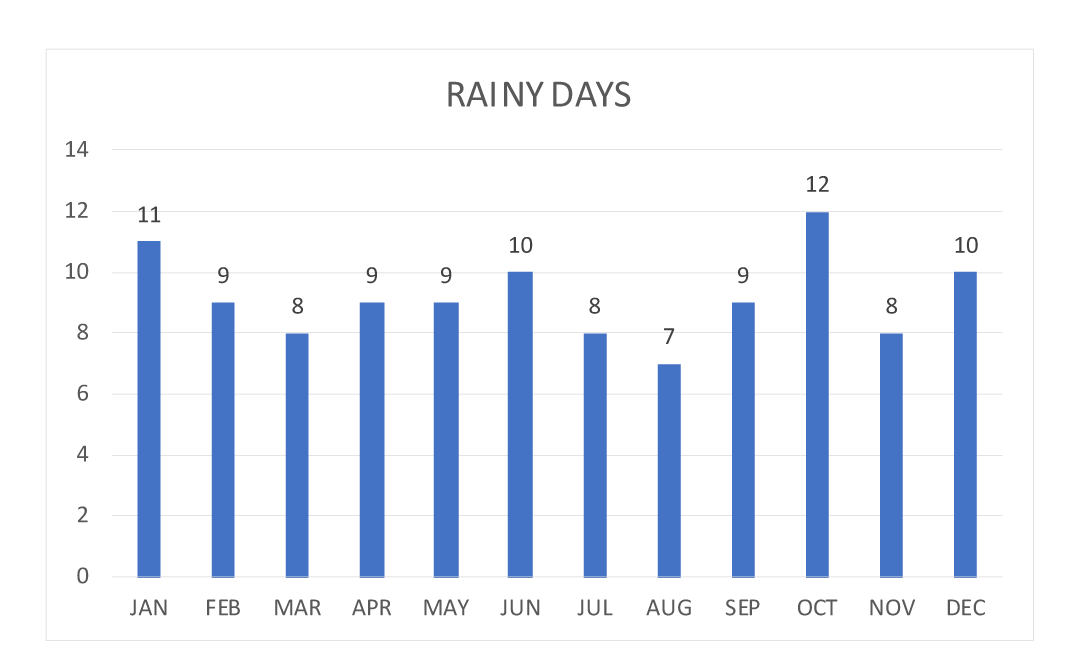
Rain is possible during every month of the year. It does not necessarily last all day, and short showers are common in the subtropical climate.
Rain should not automatically be considered a disadvantage. Cloudy or wet conditions can make the rainforest appear more vibrant, while the mist around the waterfalls becomes part of the landscape.
Visitors should carry a lightweight waterproof jacket or poncho and protect phones, cameras, documents, and other personal belongings.
Monthly Rainfall
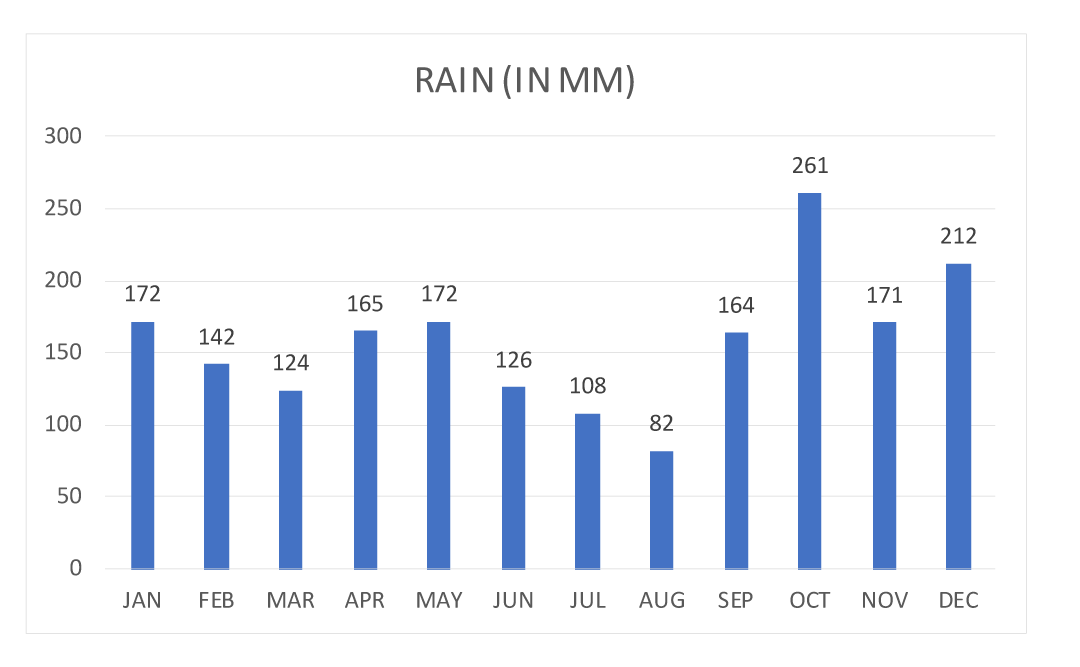
Rainfall and river levels influence the appearance of the waterfalls. After periods of heavy rain, the falls may look more powerful and produce considerably more spray. During periods of lower water levels, the individual cascades and rock formations may be easier to distinguish.
Because river conditions depend on rainfall throughout the wider Iguazu River basin, the experience cannot be predicted only from the weather forecast for Puerto Iguazú or Foz do Iguaçu.
Start Planning Your Visit to Iguazu Falls
Iguazu Falls is not a destination experienced from a single viewpoint. Its history, rainforest, wildlife, walking circuits, and two national parks all form part of the journey.
The Argentine side brings you close to the individual waterfalls through an extensive network of walkways and trails. The Brazilian side completes the experience with broad panoramic views of the entire waterfall system.
Now that you know how the destination is organized, where it is located, what each park offers, and what weather to expect, you can begin planning the details of your trip.
Explore our guides, tours, and travel information to create an itinerary that allows you to experience both sides of Iguazu Falls.
Start planning your trip to iguazu
We have put together a travel guide that will allow you, step by step, to plan your best trip to Iguazu Falls.
See our travel guide or start planning your trip by reading the first article to learn when is the best date to go to Iguazu.
Best Time to Visit Iguazu Falls, in Argentina and Brazil
Discover when is the best time to visit Iguazu Falls.